
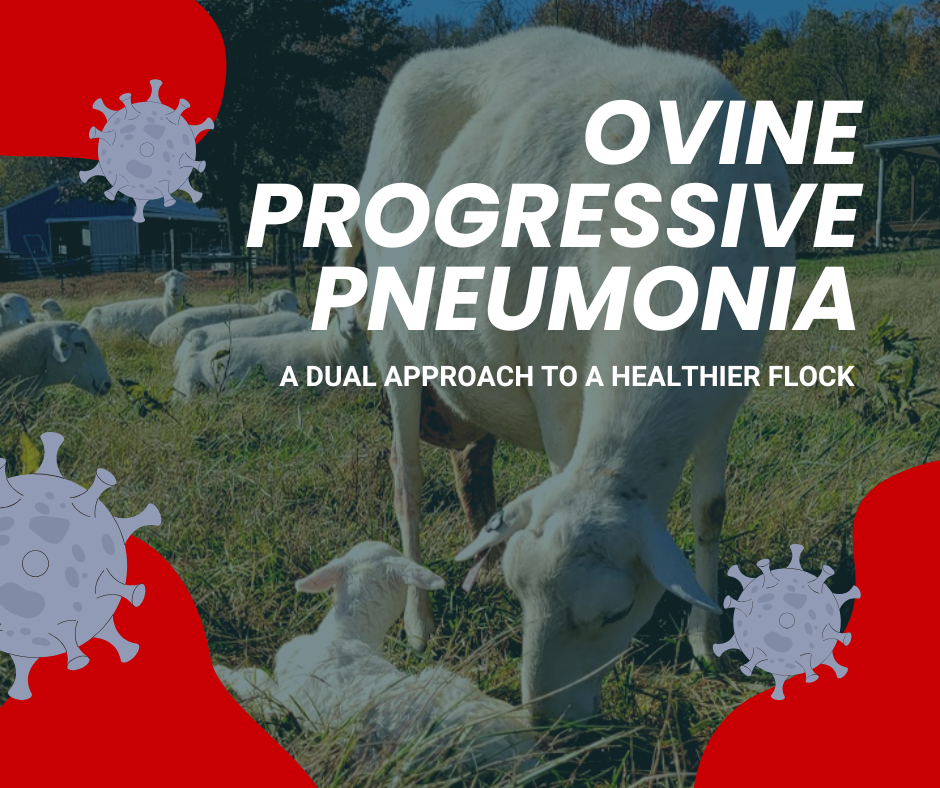
Ovine Progressive Pneumonia (OPP) is a chronic viral disease that primarily affects mature sheep over two years old. In St. Croix Hair Sheep, OPP can quietly undermine flock health and productivity. The virus spreads mainly through respiratory droplets or colostrum/milk from infected ewes to lambs, leading to lifelong infection.
Many infected sheep show no signs at first. But later, it often causes “thin ewe syndrome,” where sheep lose weight even though they eat normally. Other signs include labored breathing (earning them the nickname “lungers”), hard udder with less milk production, arthritis, or unsteady gait. Secondary bacterial infections can worsen problems, causing fever, cough, and lethargy.
For St. Croix breeders, OPP poses a significant economic threat. Infected flocks may experience low weaning weights, poor milk yields, early culling, and overall decreased efficiency. A 2001 USDA study found that over 36% of U.S. sheep operations had at least one positive animal, with prevalence increasing with age due to sheep-to-sheep transmission.
A 2011 USDA NAHMS study found that just over half of all operations (53.5 percent) were familiar with ovine progressive pneumonia (OPP) and 72.7 percent did not know their current OPP status. Do not be one of those who doesn’t know! While St. Croix sheep excel in many ways, they are not immune to OPP, and the disease can spread unnoticed. Prevention relies on biosecurity, such as isolating new additions and testing, since there’s no vaccine or cure. Only good management can limit spread.
Testing to Identify Infected Sheep
The OPP Society emphasizes that no test is 100% accurate, but consistent results over time and high-quality blood/serum samples sent to accredited labs are key. False positives or negatives can occur, so it is recommended to repeat testing if needed. Always use AAVLD-accredited labs for reliable results (e.g., University of Minnesota for Elitest ELISA, Colorado State or North Dakota State for PCR). The main testing methods include:
- ELISA (Enzyme-Linked Immunosorbent Assay): The primary test, detecting antibodies to the virus. It is machine-read for objectivity but can be overly sensitive, risking false positives. Cost: ~$7 per sample.
- PCR (Polymerase Chain Reaction): Directly detects the virus (not antibodies). Useful for confirming inconclusive cases or testing valuable animals. Cost: ~$35 per sample.
Practical Testing Strategies
Initial Screening: If you don’t know your flock’s status, use partial-flock testing on animals ≥12 months old. Randomly sample enough to achieve 95% confidence of detecting infection if ≥5% are affected (e.g., test 43 out of 100, 51 out of 200; test all in small flocks <30). Include age representation and animals present ≥2 years for better detection.
Eradication Approach: If you find positives, shift to whole-flock testing, cull positives, and retest. Combine with strict biosecurity (e.g., isolate/test new animals). Many breeders achieve 100% negative status through repeated testing and culling, reporting improved flock health and easier lambing.
Ongoing Monitoring: Test every other year after clearing it; always test new sheep coming in.
Sample Collection Tips: Work with a veterinarian; use sterile equipment per animal; avoid hemolysis; label tubes clearly; ship chilled serum horizontally with ice packs early in the week.
Testing to Identify Natural Resistance
Genetic testing is a powerful tool for breeders identify sheep with natural resistance. Studies show that variations in the TMEM154 gene affect how easily sheep get infected. Sheep with the “1,1” diplotype (homozygous for lysine at position 35), show dramatically lower infection rates—around 6.5-9.7% over 5.5 years—compared to 60-97% in other types. A 2021 study on TMEM154’s impact found that resistant “1,1” ewes did better over their lifetime: they weaned 2.1 more lambs and 88 pounds more lamb weight, with no real differences in body weight or annual lamb numbers but clear advantages in overall longevity and productivity. This means that selecting for resistance can boost flock resilience without compromising performance.
St. Croix breeders can leverage Flock54, an affordable DNA testing service ($20 per head), to screen for TMEM154 variants, other traits like scrapie resistance and fertility, as well as parentage verification. By identifying and breeding from resistant sheep, you can reduce OPP cases, boost production, and build a healthier, more sustainable flock. Start with testing key breeding stock to make informed decisions—it’s a smart way to aim for healthy, disease-free flocks.
Use Both Testing Strategies for Maximum Protection
TMEM154 Genetic Testing spots natural resistance to OPP. It does not tell you if a sheep is already infected. Using it to identify and use OPP-resistant breeding stock will help build flock resilience and support productivity, but you still need blood tests (like ELISA)and culling to remove infected sheep that spread the virus.
For St. Croix breeders, combining ELISA blood tests and TMEM154 DNA screening (like Flock54) offers the best plan: remove active infections while selecting sheep that resist the disease naturally. This dual approach helps create healthier flocks with better lambing and profits. Talk to your vet to set up a plan that works for your operation.